
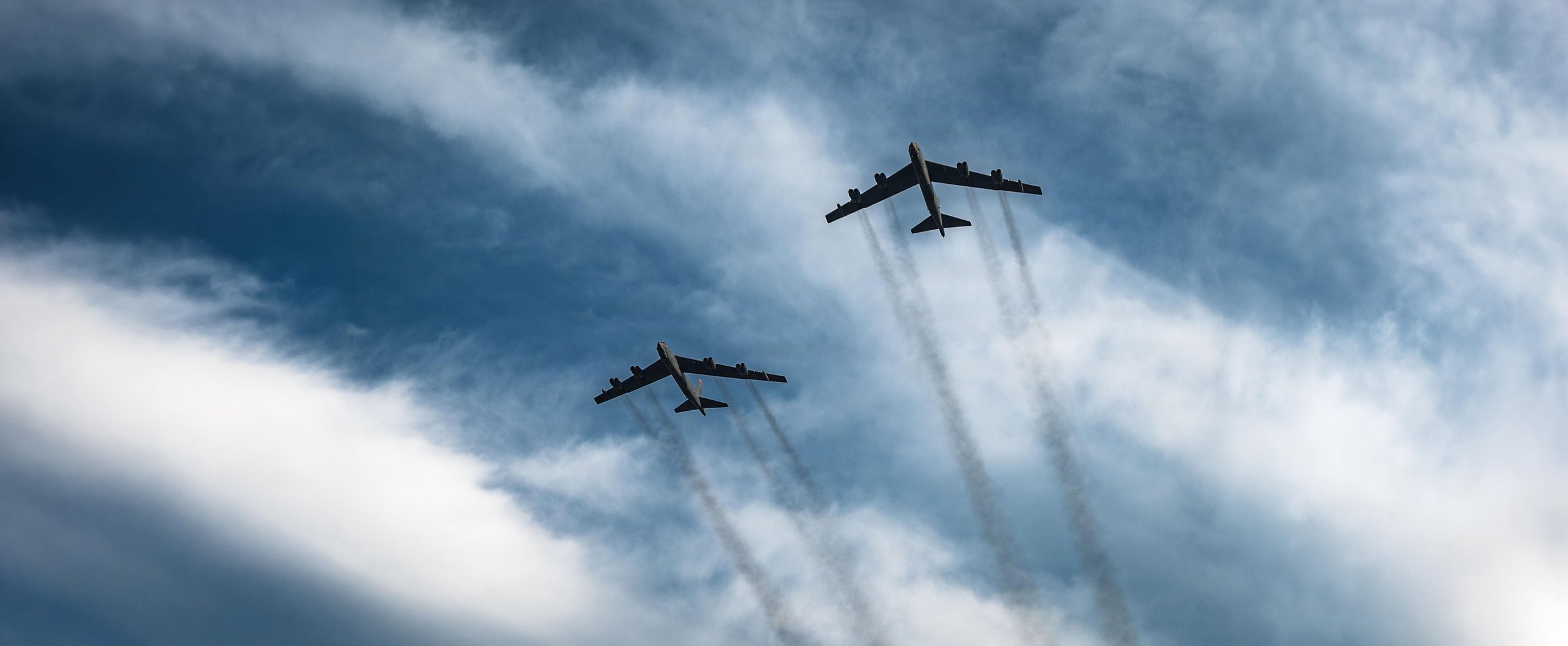
The Work Behind Readiness:
How IRIS Reached the B-52
Published October 12, 2026
How sustained coordination across requirements, technology, acquisition, and testing helped bring a critical communications capability to the bomber fleet.
Air Force requirements rarely go unmet because the need disappears. Promising solutions stall during handoffs as personnel rotate, priorities shift, and funding changes.
SBCC prevents that loss of momentum by serving as a mission integrator: connecting operational needs, viable technologies, acquisition pathways, and the organizations required to field a capability. For IRIS, that work began with the operational challenge, not a search for technology.
The Challenge: Closing a Critical Communications Gap
As long-range bomber missions grow more dynamic, the ability to exchange timely information while airborne becomes increasingly important. For B-52 crews, traditional line-of-sight communications presented limitations in maintaining connectivity across extended operational distances. Urgent operational need brought this challenge to SBCC’s tech scouting team.
Air Force Global Strike Command (AFGSC) sought a capability that would enable reliable beyond-line-of-sight (BLOS) communications, allowing aircrews to receive updated information, maintain situational awareness, and adapt as mission conditions changed.
Identifying a potential solution, however, was only the beginning.
Moving a capability from an operational requirement to fielded use involves multiple organizations, acquisition processes, integration requirements, and testing milestones. Maintaining continuity across those handoffs can be as important as the technology itself.
The Approach: Connecting the Right Capabilities and Organizations
Working within AFGSC's capability development ecosystem, SBCC's embedded Commercial Engagement and Integration team supported the effort from its early stages.
Through the command's A5N Rapid Capabilities division, established in 2022, the team helped identify and evaluate technologies that could address the communications requirement.
That work connected AFGSC with Outerlink Global Solutions, a Shreveport, Louisiana-based company developing IRIS, a roll-on, roll-off satellite communications system designed to provide B-52 crews with beyond-line-of-sight voice, text, and tactical data exchange.
SBCC personnel supported technology scouting and vetting, program and project management, stakeholder coordination, and ongoing communication across the organizations responsible for advancing the capability.
Air Force leaders retained responsibility for requirements and acquisition decisions, while SBCC's embedded team helped sustain the coordination necessary to move the effort forward.
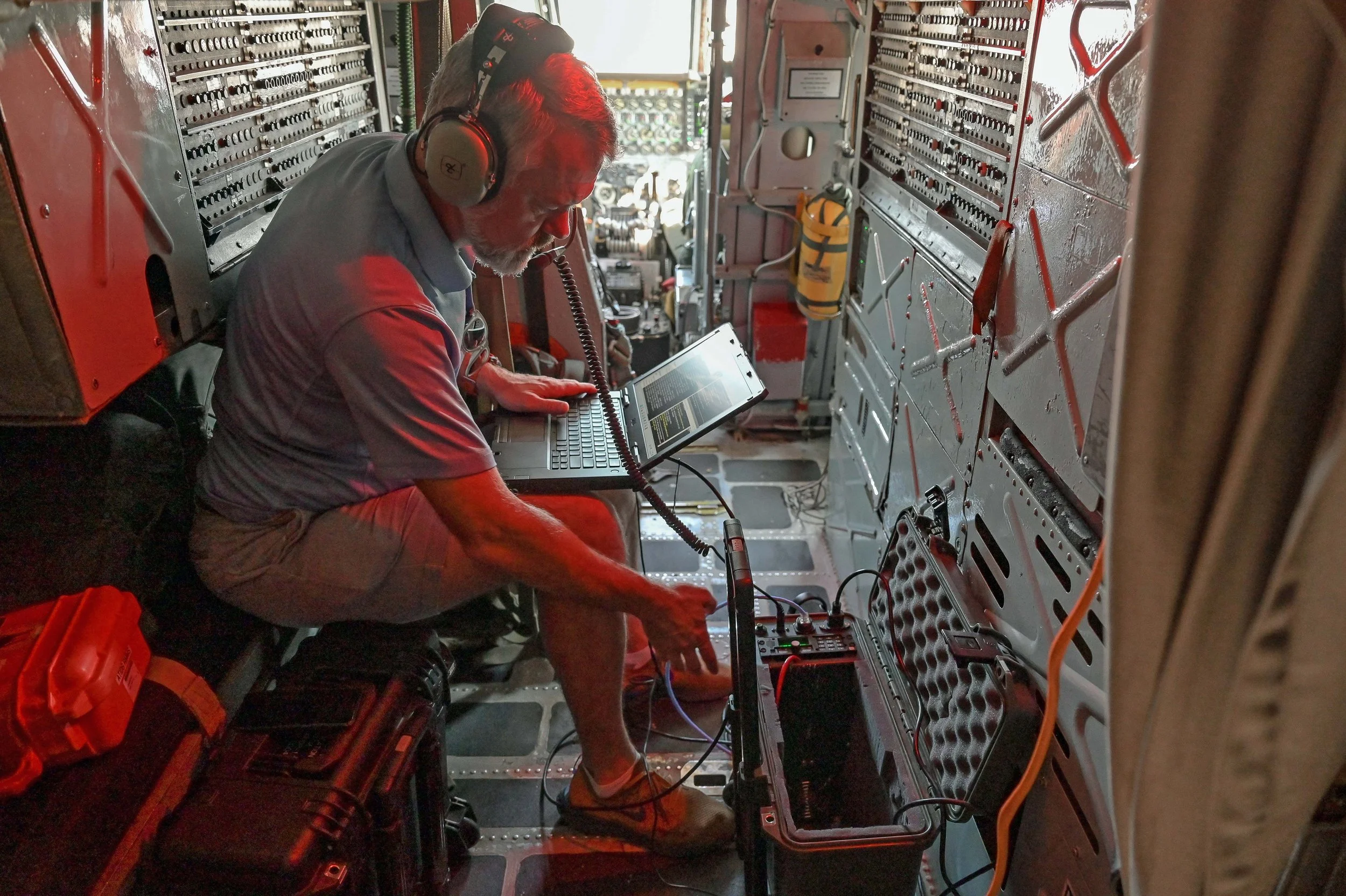
Sam Denison, a senior software developer at the 49th Test and Evaluation Squadron at Barksdale AFB, La., installs a beyond line of sight communications system, called IRIS, into a B-52 at Barksdale AFB, La., June 22, 2022. The 49th TES conducted the first aerial demonstration of the IRIS system while the 608th Air Operations Center monitored and assessed the data, voice and imagery relays from the aircraft.
Photo courtesy of AFGSC: https://www.afgsc.af.mil/News/Photos/igphoto/2003023566/
The Execution: Sustaining Momentum Through Every Handoff
IRIS progressed through a series of important milestones over more than four years.
2022 | Demonstrating the Capability
The 49th Test and Evaluation Squadron conducted the first IRIS flight demonstration aboard a B-52 at Barksdale Air Force Base. Personnel from the 608th Air Operations Center evaluated voice and data connectivity between the aircraft and supporting command-and-control elements.
2023 | Establishing the Acquisition Pathway
Outerlink received a four-year, $26 million Strategic Funding Increase (STRATFI) award through the AFWERX-supported Small Business Innovation Research program. The award, the first STRATFI designated to AFGSC, provided funding to advance testing, integration, and transition.
Don Rucker, Outerlink's Vice President and Managing Director, recognized SBCC's involvement, noting their procurement expertise helped level the playing field for a small business moving through a complex process.
2024–2026 | Advancing Integration and Operational Preparation
The B-52 System Program Office, 49th Test and Evaluation Squadron, 307th Bomb Wing, AFWERX, and other government and industry organizations continued the integration, airworthiness, testing, and operational preparation required to advance IRIS toward fielding.
Throughout these phases, SBCC's embedded personnel helped maintain continuity across more than 15 government and non-government organizations.
The value of that involvement extended beyond managing schedules or tracking milestones. It meant helping organizations remain connected as responsibilities shifted, technical challenges emerged, and the program advanced through successive requirements and approval processes.
The Outcome: Ready When Operational Needs Intensified
The importance of enhanced bomber connectivity became particularly clear during Operation Epic Fury, when rapidly changing conditions created a need to communicate updated information to aircraft already in flight.
At the 2026 Air, Space & Cyber Conference, Maj. Gen. Ty Neuman, commander of Eighth Air Force and the Joint-Global Strike Operations Center, emphasized the importance of beyond-line-of-sight communications in enabling bomber crews to adapt to changing operational conditions.
Years of foundational work had positioned AFGSC to accelerate IRIS fielding as operational needs intensified.
Following additional ground and flight testing in 2026, IRIS kits were installed aboard B-52 aircraft and delivered for training and operational employment.
On October 1, AFGSC announced that IRIS had been operationally fielded aboard the B-52.
While the capability remains a prototype and additional testing and evaluation continue, its fielding represents an important advancement in long-range bomber communications.
What This Demonstrates
IRIS reached operational fielding through the collective contributions of Air Force requirements owners, acquisition professionals, program offices, testers, operators, and industry partners.
SBCC's contribution helped keep government and industry aligned through the acquisition process, sustaining momentum where promising technologies often slow, stall, or fail to transition. Connecting the people, processes, and testing required, ushered the technology from concept to capability.
The result demonstrates an important principle of mission integration: identifying the right solution matters, but sustaining the work required to bring that solution into operational use is what turns a requirement into readiness.
SBCC: Focused on the work. Committed to the outcome.
Related Resources
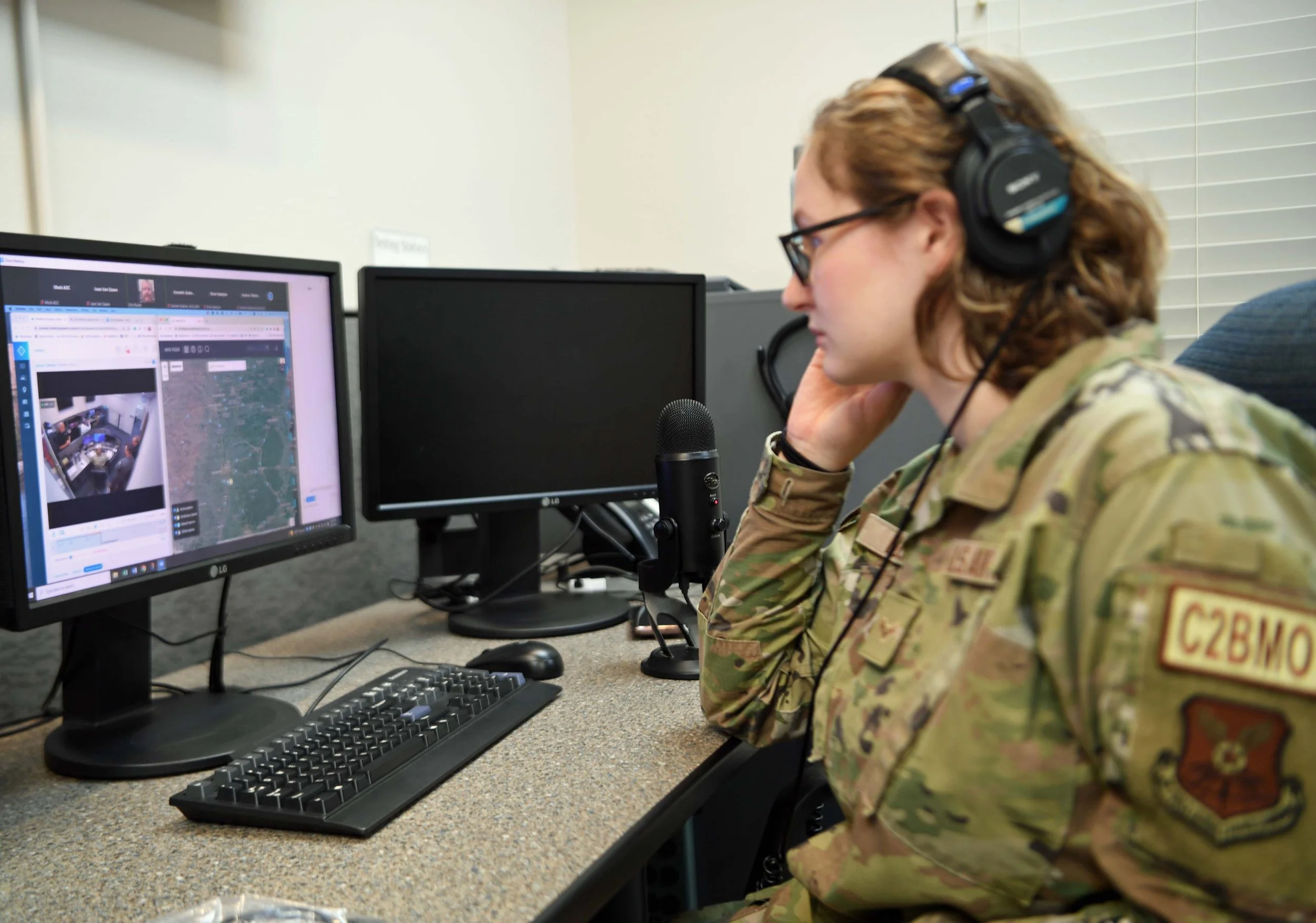
Airman 1st Class Leah Butler, a 608th Air Operations Center offensive duty technician, monitors the B-52 path and audio relay during an IRIS aerial demonstration in Shreveport, La., June 22, 2022. IRIS is a beyond line of sight communications system and allowed the bomber to transfer data, voice and imagery in near real time speeds.
Photo courtesy of AFGSC: https://www.afgsc.af.mil/News/Photos/igphoto/2003023569/
